A Look Inside Of EJI’s National Memorial For Justice and Peace

The first national museum dedicated to victims of lynching and racial terror will open to the public Thursday. For the first time Monday, local media outlets were invited inside of the Equal Justice Initiative’s Legacy Museum and National Memorial For Justice and Peace.
Located a few blocks apart, both the museum and memorial are “dedicated to the legacy of enslaved black people, people terrorized by lynching, African Americans humiliated by racial segregation and Jim Crow, and people of color burdened with contemporary presumptions of guilt and police violence” according to the EJI.
The museum, located at 115 Coosa Street in Downtown Montgomery, features interactive displays that document the horrors of slavery in the U.S. up until the mass incarceration of African-Americans today.
The six acre memorial, sits at 417 Caroline Street, and is dedicated to thousands of African American men women and children lynched over a 70-year period following the Civil War. At the center of the site stands a massive memorial square with 800 six-foot monuments, engraved with the names of the documented lynching victims and the states and counties that they took place.
Exact replicas of those monuments are also on the site, and the EJI is encouraging counties and/or local communities to claim those monuments to take back with them.
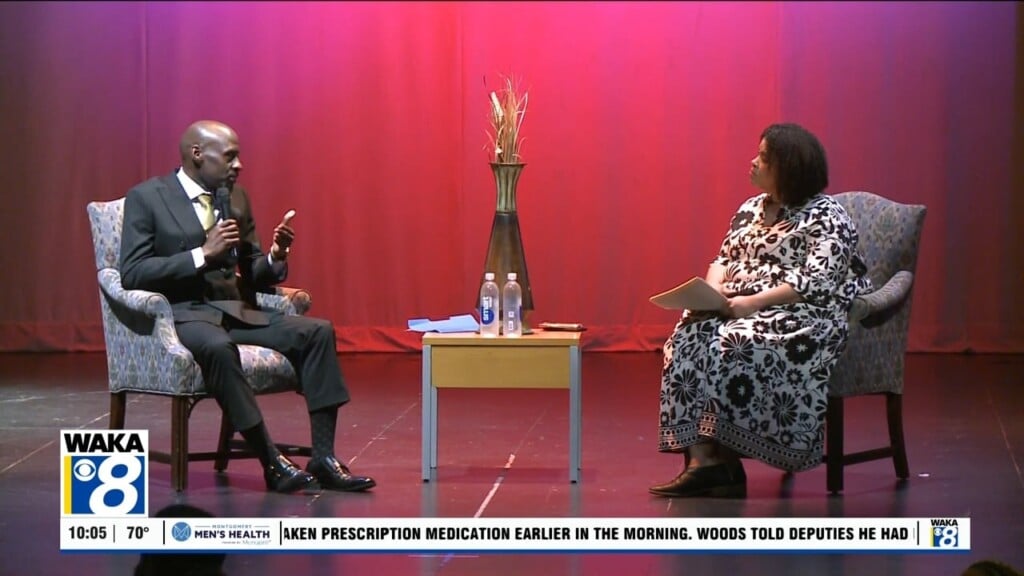
“What will happen over the next 5 -10 years is that or memorial will kind of become a report card on which communities have owned up to this history and which communities haven’t” said Bryan Stevenson, founder and executive director of the Equal Justice Initiative.
Family members of Thomas Miles Sr. – lynched in Shreveport, Louisiana in 1912, traveled to Montgomery from California for the grand opening.
“He was accused of giving a letter to a white woman” explained Shirah Dedman, Miles’ great granddaughter “a judge found that it was not in his handwriting and he was released from jail through the back door, where from many accounts there was a mob waiting for him and they strung him up and they shot his body”.
The names of those engraved in the memorial are only those of documented victims. There are thousands more whose names we may never know, though the EJI says that others with stories like Miles’ family have since reached out to have their story told as well.
Stevenson says the EJI does research those stories, as they have done with the thousands of other victims to determine if there is documentation that a lynching did occur. Stevenson says there is room to add more names to the memorial if needed.