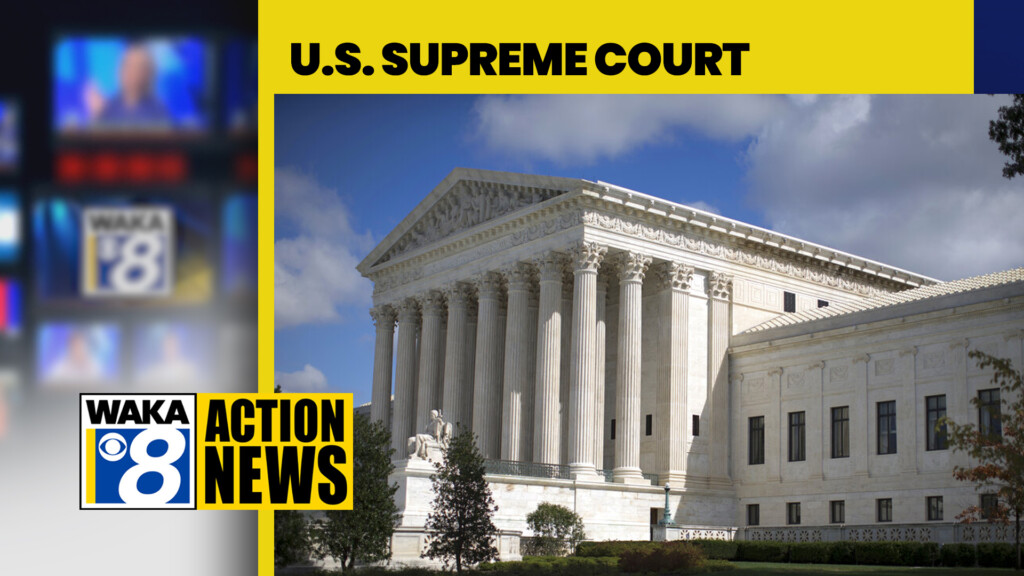
CAMPAIGN 2026: U.S. Supreme Court to allow mail-in voting to continue as usual

WASHINGTON (AP) – The U.S. Supreme Court has rejected President Trump’s attempt to limit voting by mail, which will allows this method of voting to continue as usual.
Thousands of election offices around the country can now send out mail ballots as they had intended without worrying about complying with new rules imposed at the 11th hour.
“Now, we can finally move forward and get back to what we do best: conducting our elections without a dark cloud hanging over us — fairly, openly, for the people, by the people,” California Secretary of State Shirley Weber, a Democrat who oversees voting in a state where all voters receive a mail ballot, said in a statement after the decision.
The case before the court stemmed from an executive order Trump signed in March.
The administration developed a plan that would require states to adopt a uniform envelope style for mailed ballots and submit lists of eligible voters to an online portal it was developing. The Postal Service could refuse to deliver ballots to states that didn’t comply.
In a social media post today, President Trump said justices who opposed the plan were “not the people I interviewed.”
“The Court’s inability and unwillingness to do the right thing for our Country will go down, in a very negative way, in the annals of History,” Trump wrote. “This Supreme Court is bullied and cajoled by the Radical Left into making decisions that have set America back at least a hundred years.”
Justices Sam Alito and Clarence Thomas publicly dissented from the order, and Trump called them “legends both.” Trump has nominated three of the justices on the Supreme Court — Neil Gorsuch, Amy Coney Barrett and Brett Kavanaugh.
A whistleblower report said the postal system’s requirements could lead to millions of mail ballots never being sent, disenfranchising many of the country’s voters during an election that will decide control of Congress during the final two years of Trump’s term.
A tangle of legal challenges, rapid-fire rulings and appeals left election officials uncertain about what rules would ultimately be in place. But they agreed on one thing: Introducing such massive changes so close to a general election would be chaotic and nearly impossible to pull off in a country where roughly a third of voters use mail ballots.
The Supreme Court’s decision comes as mail voting is already in progress in some states. Some election officials have said they were worried that the dispute, coming late in the election cycle, would leave voters confused about what’s allowed.
The concern was particularly acute in the eight states where voters cast ballots almost entirely by mail: California, Colorado, Hawaii, Nevada, Oregon, Utah, Vermont and Washington. They had faced the daunting challenge of adapting in short order without an extensive network of polling places.
(Copyright 2026 The Associated Press. All rights reserved. This material may not be published, broadcast, rewritten or redistributed.)