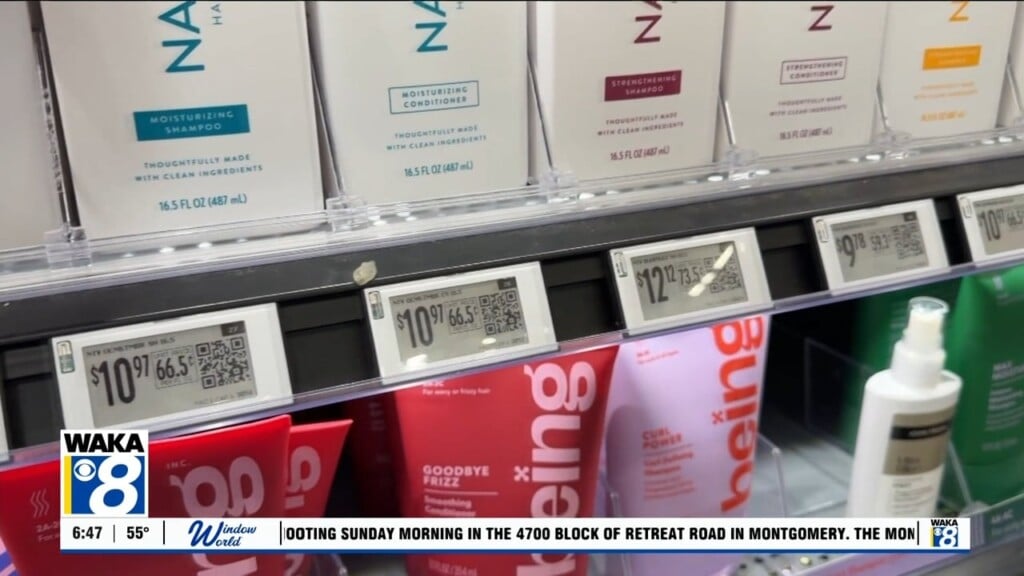
What the Tech: Why is Walmart and other retailers switching to dynamic price tags?
WHAT THE TECH (WAKA) – Imagine picking up a bottle of shampoo at Walmart priced at $10.99, while another shopper standing beside you is offered the same bottle for less.
The technology to make personalized pricing possible exists, raising concerns that retailers could someday use what they know about customers to determine how much each person is willing to pay.
Walmart CEO John Furner is now addressing those concerns directly, saying the retail giant will not use its growing arsenal of digital technology to set different prices for different customers.
“We price the product, not the person,” Furner wrote in a letter to Walmart customers and members.
Walmart’s digital price tags
Walmart has been replacing traditional paper price tags with electronic displays known as digital shelf labels. They may be easy to miss. The small screens look similar to the paper price tags they’ve replaced.
The difference is that employees no longer have to walk through the store changing thousands of paper tags by hand. Prices displayed on the electronic labels can be updated digitally.
Walmart says the technology helps ensure the price displayed on the shelf matches the price customers are charged at checkout. Furner also says it saves employees considerable time replacing paper tags. But the ability to change prices electronically has also raised concerns about dynamic and personalized pricing.
Could stores charge different customers different prices?
The technology exists for retailers to recognize individual shoppers. Facial recognition systems demonstrated at technology shows such as CES can detect faces and, depending on the system and how it is deployed, potentially identify returning customers.
When identification technology is combined with customer data, it raises the possibility of retailers knowing who is shopping and using information about that customer when determining
what prices or offers they see.
There’s also dynamic pricing, in which prices could change because of demand or other circumstances. One frequently cited example is raising the price of umbrellas when a rainstorm
approaches.
Furner says Walmart isn’t going to do either. “Prices can change,” he wrote. “We lower them when we can pass savings along. Sometimes they rise because an item costs more to buy or transport.” But Furner drew a line at using information about an individual customer. “Using someone’s income, shopping history or moment of need to charge them more would
violate the EDLP promise our business model is built on. We won’t do it.”
Furner went even further later in the letter: “We don’t set different prices based on who you are or the time of day, and we won’t.” He said a customer’s “income, shopping history, urgency or what we think you could pay” will not change the price.
What about AI?
Walmart is also increasingly using artificial intelligence, including its Sparky AI shopping assistant. Furner said Walmart won’t use information customers provide to its AI shopping tools to
determine what they should pay. “We’ve never used the relationships our associates have with customers to charge more, and we won’t do that with AI,” he wrote.
Walmart also says its digital shelf labels do not contain cameras or microphones and are not being used to identify the shopper standing in front of them. The distinction is important. Digital shelf labels make changing displayed prices considerably faster and easier than replacing paper tags. Other technologies can identify shoppers and analyze customer data.
Walmart says it won’t combine those capabilities to decide that one customer should pay more than another.
The debate isn’t going away. State and federal lawmakers have been considering restrictions on what is sometimes called “surveillance pricing,” the use of personal information and algorithms
to determine prices or offers for individual consumers.
For Walmart shoppers, however, Furner’s message is unusually direct: Technology may change how Walmart displays and manages prices, but the company says who you are and what it
knows about you won’t determine the price you pay.