State leaders break ground for Mobile River Bridge and Bayway Project

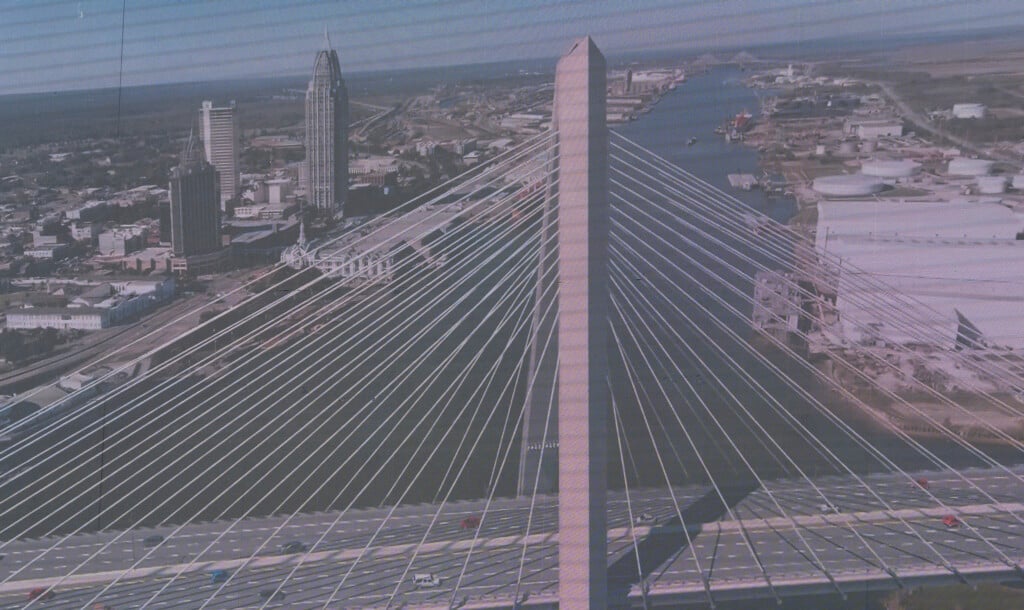
Rendering of new bridge in Mobile – Image from Office of Governor Kay Ivey
MOBILE, Ala. (WAKA) – On Friday, October 2, state and federal leaders broke ground for the Mobile River Bridge and Bayway Project at Cooper Riverside Park in Mobile,
The estimated construction cost of Phase 1 is $3.2 billion, making it the largest transportation project in the state’s history. It is also roughly double the entire state of Alabama’s transportation budget.
The project to construct the six-lane bridge is expected to take about five years. The idea to build the bridge to ease traffic congestion on Interstate 10 in the Mobile area was first proposed in 1997.
Rather than constructing every component simultaneously, ALDOT says it developed a two-phase plan designed to keep the project financially viable and to provide traffic improvements sooner.

Federal, state and local leaders break ground on $3.2 billion Mobile bridge project, Friday, October 2, 2026 – Photo from Office of Governor Kay Ivey
Phase One includes:
– Construction of a new six-lane cable-stayed bridge.
– Restriping the existing Bayway to provide six lanes of traffic across Mobile Bay.
– Improvements to major interchanges, intersections and traffic flow throughout the corridor in Mobile and Baldwin counties.
Phase Two includes:
– Construction of a new Bayway structure as additional funding becomes available, with future toll revenue helping finance the project.
Tolls have been proposed for people who use the bridge. According to ALDOT, this is how they would be collected:
$60 unlimited monthly commuter pass (about $1.36 per trip for daily commuters)
$3 per trip with an ALGO Pass
$7.70 per trip using a compatible interoperable transponder
Pay-by-plate billing for drivers without a transponder
ALGO transponders are expected to be available free of charge during the initial rollout.
Project leaders credited months of coordination among ALDOT, the White House, the U.S. Department of Transportation, the Federal Highway Administration, Governor Kay Ivey, Alabama’s congressional delegation and local officials for creating a viable path forward.
Recent federal actions increased flexibility in the use of funding, addressed regulatory requirements and supported financing mechanisms needed to advance construction.