What The Tech: Streaming platform costs are rising
BY JAMEY TUCKER, Consumer Tech Reporter
Cutting the cable cord used to be an easy way to save money. Today, it can take a little more
work.
When Sling TV launched in 2015, it was one of the first streaming services designed to be a real
replacement for cable. For $20 a month, subscribers could watch live television channels,
including ESPN.
At the time, Netflix cost about $9 a month and Hulu was about $8. Put all three together and you
could have live television plus two of the biggest streaming services for less than $40 a month.
That was a pretty compelling reason to cut the cord.
What does a similar streaming setup cost today?
Live TV streaming has become considerably more expensive.
Sling remains one of the less expensive options, depending on the package you choose. YouTube TV and Hulu + Live TV now cost more than $80 a month.
DirecTV’s standard base package starts at $89.99. But the company also offers smaller “Genre
Packs” if you don’t want to spend for channels you don’t want. DirecTV also has a free tier of
channels.
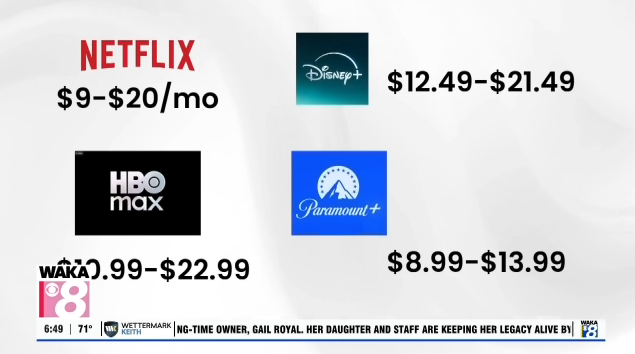
Netflix, Disney+, HBOMax, Peacock, Paramount+ and Apple TV can each add another monthly
charge. Ten dollars here, $15 there and $20 somewhere else can quickly turn into a sizable
monthly entertainment bill.
There’s another expense that’s easy to overlook: internet service. Unlike traditional cable TV,
streaming requires a reliable high-speed internet connection and that could easily reach over
$100/month.
It’s not a perfect comparison. Streaming services generally don’t require the equipment,
long-term contracts or exact channel packages associated with traditional cable, and prices vary
considerably depending on what you watch.
Still, the enormous savings that originally made cutting the cord so attractive aren’t as easy to
find today.
Try “churning” your streaming subscriptions
One of the easiest ways to lower your streaming bill is something known as “churning.”
Instead of subscribing to Netflix, Max, Apple TV and several other services at the same time,
rotate between them.
For example, subscribe to Netflix for a month or two and watch the shows and movies on your
list. Then pause or cancel Netflix and subscribe to Max. When you’re finished there, move to
another service.
Depending on which subscriptions you rotate, this strategy could save $20 to $40 a month.
Just remember to cancel before the next billing date.
Check for streaming services you may already get for free
Before paying for another subscription, check the benefits that come with services you’re
already paying for.
Some wireless carriers include streaming subscriptions with qualifying plans. T-Mobile, for
example, includes Netflix with some wireless plans.
Also check your internet provider and credit card benefits. You may qualify for free
subscriptions, monthly credits or discounted streaming plans without realizing it.
We’ve rebuilt the bundle
Many of us originally cut the cord because we didn’t want to pay for a large bundle of cable
channels we weren’t watching.
The irony is that we’ve slowly built another expensive bundle ourselves.
The difference is that instead of receiving one big bill every month, we’re now getting six or
seven smaller ones.
The best way to keep streaming cheaper than cable may be to stop treating every streaming
subscription as something you need to keep year-round.